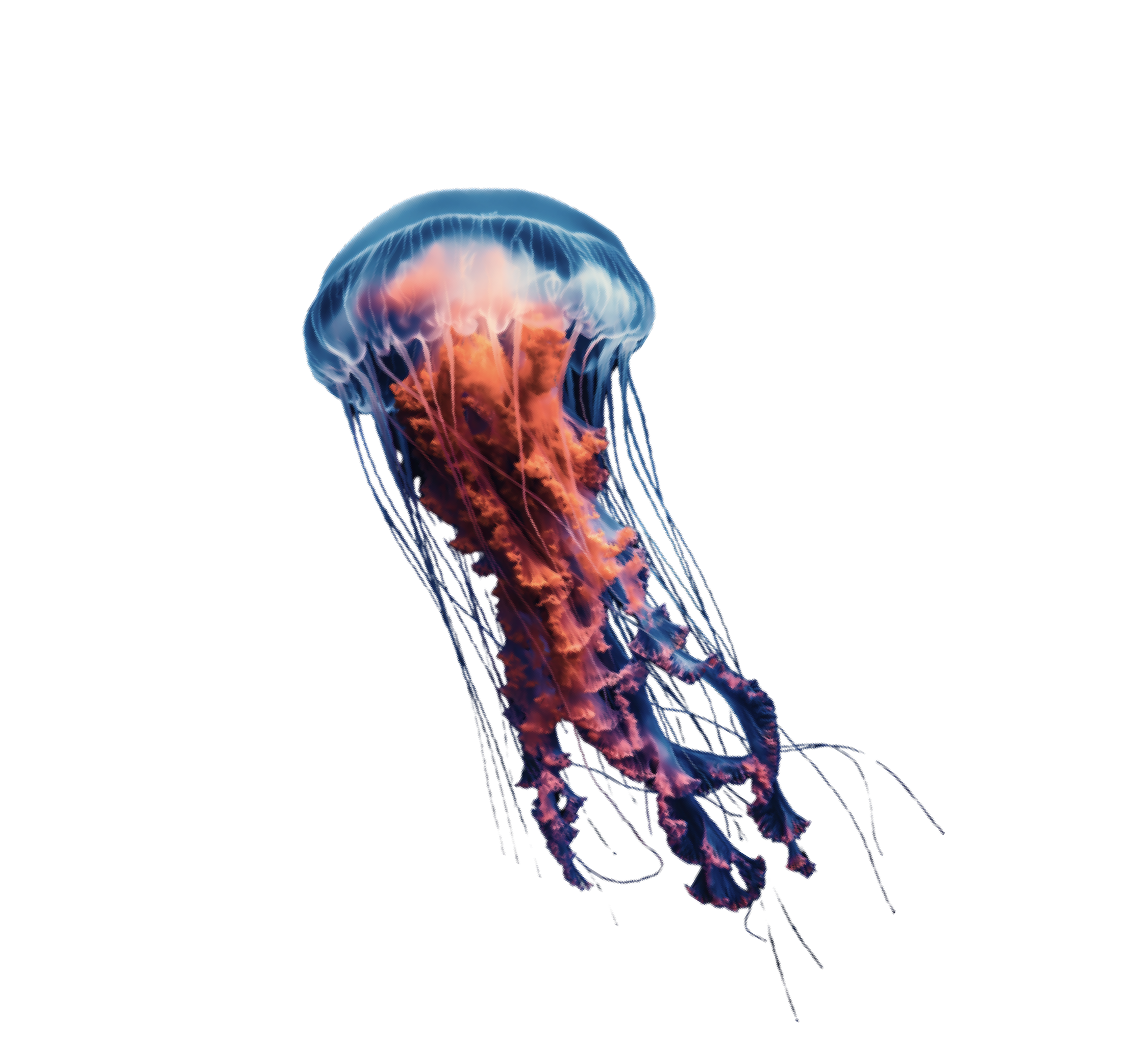
Open-water swimmers meet jellyfish on their own terms: no wetsuit on a warm day, long exposure, arms sweeping through water you can't see into. A sting mid-swim is different from a sting at the shoreline: you're farther from help, you can't stop moving, and panic is more dangerous than venom. This guide covers what swimmers specifically need to know: how to lower your odds before you get in, what to do in the water, and how to treat the sting when you're back on shore.
Before the swim: prevention that actually works!
Check the flags and the local report. On Florida beaches, a purple flag means dangerous marine life; usually jellyfish, Portuguese man-o-war, or sea lice. Lifeguard stands and county beach-condition pages update daily. Thirty seconds of checking beats thirty minutes of burning.
Know the season. In Florida, jellyfish activity peaks June through September, with sea lice most active May through August, especially on the Atlantic side from Palm Beach to Broward. After storms and strong onshore winds, expect more stingers close to shore.
Cover skin where you can. A rash guard or swim skin is the single most effective barrier, as most stings land on uncovered arms, legs, and torso. Long-sleeve rash guards are standard practice for triathletes training in warm open water for exactly this reason.
Barrier lotions help, but know their limits. Sting-prevention lotions (such as Safe Sea) can reduce the chance that brushing contact triggers a sting. They are prevention only: once you're stung, they do nothing for the pain. A complete swim kit pairs prevention on your skin with relief in your beach bag.
Swim with awareness. Man-o-war float on the surface and are visible; moon jellies drift below. Scan ahead on breathing strokes. If you see one, there are usually more, so adjust your line, not just your distance.
In the water: if you're stung mid-swim
Stay calm and keep swimming: a jellyfish sting is painful but very rarely dangerous to a healthy adult. Move away from the area with smooth strokes; thrashing increases contact with remaining tentacles. Don't rub the sting site underwater: rubbing fires more stinging cells. Get to shore or your support kayak, then treat it properly.
Get out of the water immediately and seek medical help if you have trouble breathing, chest tightness, widespread hives away from the sting site, dizziness, or if the sting covers a large area of the body, as these can signal a severe reaction. That's an emergency, not a first-aid situation.
On shore: treating the sting, step by step
- Rinse with seawater, NOT fresh water. Fresh water changes the osmotic balance and can trigger unfired stinging cells still on your skin. Pour seawater over the area.
- Remove tentacle fragments with tweezers or the edge of a card. Don't use bare fingers.
- Heat helps. The medically validated treatment for most jellyfish stings is hot-water immersion (40–45 °C for 20–45 minutes); the heat deactivates the protein-based venom. On a real beach, sustained hot-water immersion is usually impossible. The practical alternative: apply a reusable heat pack directly on the affected zone, using one or more packs depending on how large the sting area is. The ZooKeeper 4" x 6" Reusable Heat Packs are sized right for a swim bag and reusable all season.
- Apply a lidocaine-based cream. Lidocaine is included in the American Red Cross first-aid steps for jellyfish stings, and a 2025 peer-reviewed review supports lidocaine for sting pain relief. StingMaster is a 4% lidocaine topical analgesic formulated specifically for marine stings — jellyfish, man-o-war, sea lice, fire coral, and lionfish — sized for a swim bag, and applied directly to the sting for fast temporary relief of pain and itch.
- Skip the folklore. Urine doesn't work. Meat tenderizer contains papain, which degrades proteins, but it can also damage your skin, and results are inconsistent. Vinegar helps only for specific species (like box jellyfish) and can make some stings worse. Alcohol makes things worse. When in doubt: seawater rinse, remove tentacles, heat if available, lidocaine for the pain.
Sea lice: the swimmer's special misery
"Sea lice" in Florida aren't lice at all — they're microscopic thimble jellyfish larvae that get trapped between skin and swimwear and sting where fabric presses: waistbands, straps, and under rash guards. The itchy, bumpy rash ("seabather's eruption") often appears hours after the swim.
Swimmer-specific tips: change out of your suit as soon as possible and shower after removing it (fresh water while wearing the suit can trigger trapped larvae to fire). Wash the suit thoroughly before rewearing. For the itch and sting, a topical lidocaine cream provides temporary relief while the rash resolves over several days. See a doctor if the rash is severe or accompanied by fever.
The swimmer's sting kit
Everything fits in a sandwich bag inside your swim bag: a rash guard on your body, barrier lotion if you use one, tweezers or an old gift card, a small bottle for seawater rinsing, a reusable heat pack, and a jar of StingMaster for the pain. Prevent what you can; relieve what you can't.
StingMaster is a 4% lidocaine (FDA-listed OTC, NDC# 80324-078-00) topical analgesic developed with input from McGill University pain researchers, made for the stings swimmers actually get.
This article is for general information and isn't medical advice. For severe reactions — difficulty breathing, spreading hives, dizziness — seek emergency medical care immediately.